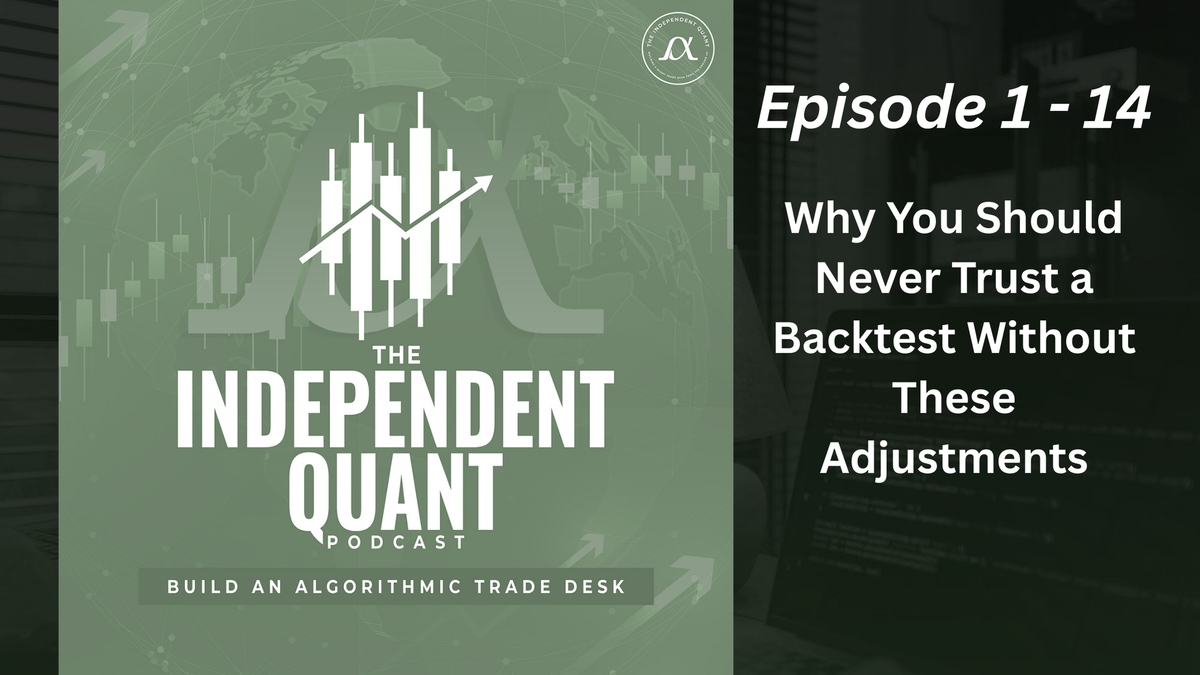
TIQ Podcast Episode 1-14: Why you should never trust a backtest without these adjustments
In the world of algorithmic trading, backtesting is a crucial step in evaluating the effectiveness of a trading strategy. However, without proper adjustments, backtesting can lead to misleading results and potentially disastrous outcomes. In this post, I'll share three big ideas from Luis Martinez's Independent Quant podcast episode on backtesting adjustments, explain why they matter, and provide actionable steps to apply them in your own trading strategies.
Three Big Ideas from the Transcript
-
Account for Trading Costs and Slippage
When backtesting a trading strategy, it's essential to include trading costs and slippage to get a realistic view of its performance. Trading costs include commissions, fees, and any other expenses your broker may charge for executing trades. Slippage, on the other hand, refers to the difference between the expected price of a trade and the actual price at which it is executed. This can occur due to liquidity issues, order book dynamics, and other market factors.
Many trading platforms allow you to include these costs in your backtest, often with a simple checkbox. If you're building your own platform, ensure you know how to calculate and incorporate these costs and slippage into your backtest. If you're unsure about your trading costs, reach out to your broker for clarification. Understanding your costs is crucial for running a successful trading business.
-
Avoid Look-Ahead Bias
Look-ahead bias occurs when your algorithm uses future information to make trading decisions during backtesting. This can happen if your strategy inadvertently looks at data that it wouldn't have access to in real-time trading. Look-ahead bias can make a mediocre strategy appear phenomenally good, leading to false confidence in its performance.
To avoid this, ensure your strategy only uses data available at the time of the trade. Most broker-provided platforms have built-in safeguards against look-ahead bias, but if you're coding your own strategies, carefully review your model to ensure it doesn't introduce this bias.
-
Use a Survivorship Bias-Free Dataset
Survivorship bias occurs when your backtest only includes companies or securities that are currently in existence, ignoring those that have failed over time. This can lead to overly optimistic results, as the dataset doesn't account for the companies that didn't survive.
To combat survivorship bias, ensure your dataset includes all companies or securities that were available during the period you're backtesting. One way to do this is by using a pre-made pool of securities, such as an ETF, which already accounts for many of these factors. For those trading a single, long-standing company like Coca-Cola, survivorship bias is less of an issue.
Why It Matters
Implementing these adjustments in your backtesting process is crucial for several reasons:
- Realistic Performance Evaluation: Accounting for trading costs, slippage, and biases ensures that your backtest reflects the true performance of your strategy.
- Risk Management: Understanding and incorporating these factors helps you manage risk more effectively, preventing unexpected drawdowns and account blowouts.
- Confidence in Strategy: A well-adjusted backtest provides greater confidence in your strategy's ability to perform in live trading conditions.
How to Apply It
-
Account for Trading Costs and Slippage:
- Use your trading platform's features to include trading costs and slippage in your backtest.
- If building your own platform, ensure you calculate and incorporate these factors accurately.
- Consult your broker for detailed information on your trading costs.
-
Avoid Look-Ahead Bias:
- Review your strategy to ensure it only uses data available at the time of the trade.
- Utilize broker-provided platforms that have built-in safeguards against look-ahead bias.
- If coding your own strategies, carefully audit your model for any instances of look-ahead bias.
-
Use a Survivorship Bias-Free Dataset:
- Ensure your backtest includes all companies or securities available during the tested period.
- Consider using pre-made pools of securities, like ETFs, to account for survivorship bias.
- For single-company strategies, be aware that survivorship bias is less of an issue.
Key Takeaways
- Backtesting is a vital tool for evaluating trading strategies, but it requires careful adjustments to be reliable.
- Accounting for trading costs and slippage, avoiding look-ahead bias, and using a survivorship bias-free dataset are essential for realistic performance evaluation.
- These adjustments help manage risk, build confidence in your strategy, and increase the probability of success in live trading.
Optional: Transcript Highlights
- Trading Costs and Slippage: "Even though you know that you should be accounting for these, some platforms, as easy as they make it, it's usually just a checkbox, but if you don't remember to click that box, mean, you're hosed."
- Look-Ahead Bias: "Your algorithm is looking at the answer while taking the test. So it is trying to guess whether it should take a trade or not. But it's using information that it's already seen, which is not the way it's going to be when it's in the real market."
- Survivorship Bias: "If you have a data set that has survivorship bias bias, it means that you are testing your data set on companies that are currently in existence. So if you take those companies and you back test them over a certain period of time, a pool of stocks or pool of securities, whatever it is that you're doing, it's going to look really good because it's not counting all the failures that have happened over that period of time."
CTA
If you found these insights valuable, consider signing up for the free mini course at Independent Quant. Join a community of like-minded traders and enhance your algorithmic trading skills. Hit the link below to get started:
Happy trading, and may your backtests be ever trustworthy!